 Private Money Lenders
Read time: 30 seconds
- ARV = after-repair value: the projected resale price once the renovation is done, supported by comps of similar finished homes nearby.
- The appraiser's ARV is the one that funds. Your estimate is a planning tool; the lender sizes the loan against the appraised number.
- Appraisers build ARV from comps, adjusting recent renovated sales up or down for differences — not from the single best sale on the block.
- ARV caps your loan via ARV LTV (~70%). The loan is the lesser of the ARV cap and the loan-to-cost cap. A lower ARV means more cash to close.
- You can defend a higher ARV with a comp packet — three to five supportable closed sales the appraiser missed — and a clean scope of work. Opinion and pressure do nothing.
What ARV is, and who decides it
ARV — after-repair value — is the market value a property will have once your planned renovation is complete. It is a projection of the future resale price, supported by comparable sales of similar renovated homes nearby. Every fix-and-flip number you care about keys off it.
ARV is the foundation of flip underwriting for one reason: the lender sizes the loan as a percentage of ARV. It is also the foundation of your own deal analysis, because the 70% rule caps your maximum offer at 70% of ARV minus rehab. The same number sets your purchase ceiling and your loan size. Get it wrong on the high side and a deal that looked profitable on the spreadsheet evaporates at the appraisal.
Here is the part that trips up new investors: you do not decide the ARV that funds your loan. You estimate one during your analysis — and you should, because you need it to make an offer. But the number the loan is actually sized against comes from a licensed appraiser the lender orders. If the appraiser supports a lower ARV than you estimated, the loan is sized to the appraiser's figure, full stop.
Your ARV is a planning tool. The appraiser's ARV is the one that writes the check. Underwrite to theirs, not yours.The rule that prevents a closing-table surprise
How an appraiser builds ARV
An appraiser does not pull ARV from a model or a guess. They build it with the sales comparison approach, the same method used in any residential appraisal, applied to the property's projected finished condition rather than its current state.
The process has four steps:
- Select comparable sales. Recent closed sales — usually within the last 3–6 months and a mile or less — of homes similar to the subject in style, size, age, and, critically, renovated condition. The comps must reflect the finish level the subject will have after rehab, not before.
- Adjust each comp. No two homes are identical, so the appraiser adjusts each comp's sale price up or down for measurable differences: square footage, bedroom and bathroom count, garage, lot size, and finish level. A comp 200 sq ft larger than the subject gets adjusted down; one with one fewer bathroom gets adjusted up.
- Reconcile to a supported value. The adjusted comp values cluster in a range. The appraiser reconciles them to a single supported number, weighting the most similar comps most heavily. That number is the ARV.
- Check the scope of work. The appraiser reviews your renovation budget and scope to confirm the work will actually deliver the condition of the comps they used. A budget that cannot reach that finish level forces a lower ARV.
The discipline that constrains the appraiser is comp support. They cannot reach for the single highest sale in the neighborhood unless a cluster of genuinely comparable sales supports it. This is exactly where investor estimates and appraised values part ways.
The gap between your ARV and theirs
Investors estimate ARV optimistically. It is not usually dishonesty — it is the natural pull of someone who wants the deal to work. The three most common ways an investor's ARV runs ahead of the appraiser's:
- Anchoring on the top sale. You find the one renovated home that sold for a premium and treat it as the comp. The appraiser sees it as an outlier and weights the supported cluster instead.
- Skipping adjustments. You compare to a home that is larger, on a better lot, or more fully finished, without adjusting down for those advantages. The appraiser adjusts; the value drops.
- Assuming a finish the budget won't deliver. You price the ARV at a designer-renovation level but the rehab budget supports a solid-but-standard finish. The appraiser credits the finish the scope actually funds.
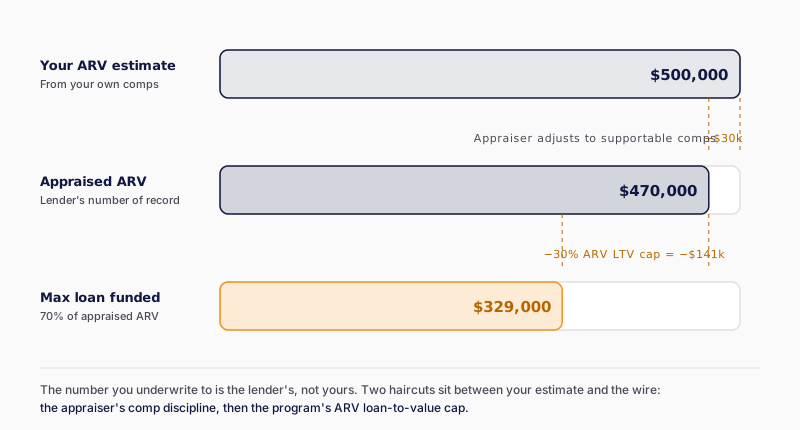
The gap is usually modest — a few percent — but it lands with full force on your loan, because the loan is a percentage of the lower number. A $30,000 ARV haircut is not a $30,000 problem; it is a problem multiplied by your ARV LTV and then paid in cash.
How ARV drives your loan amount
Fix-and-flip lenders apply two caps to every loan, and the loan is the lesser of the two:
- ARV loan-to-value (ARV LTV) — the loan may not exceed a set percentage of the appraised ARV, commonly around 70%. This protects the lender's exit: even if the flip fails and the property sells, the loan stays well below resale value.
- Loan-to-cost (LTC) — the loan may not exceed a set percentage of total project cost (purchase + rehab), commonly up to 90% on a strong file. This keeps the borrower with real money in the deal.
Because the funded loan is whichever cap is lower, a deal can be ARV-constrained or cost-constrained, and the appraised ARV decides which. When ARV comes in low, the ARV cap tightens and frequently becomes the binding constraint — which means a soft appraisal directly increases the cash you bring to close.
A worked example
Take a typical flip. You estimate ARV at $500,000. Purchase is $300,000, rehab is $80,000, so total project cost is $380,000. The program is 70% ARV LTV and 90% LTC. First, what you expected at your $500K ARV:
At your number, the deal is cost-constrained — LTC is the binding cap, and you bring $38K. Now the appraisal lands at $470,000, a $30K haircut:
The deal flipped to ARV-constrained, and the $30K ARV haircut cost you $13,000 of additional cash at the table ($51K vs $38K). That is the leverage every ARV dollar carries: a soft appraisal does not shave a little off the margin, it can change the entire capital structure of the deal — and it is exactly why a realistic ARV matters before you make the offer, not after. The same logic drives the 70% rule's maximum-offer ceiling.
How to defend a higher ARV
When you believe the appraised ARV is genuinely low, you have one effective tool: a reconsideration of value backed by a comp packet. Not an opinion, not a phone call expressing displeasure — appraisers are required to ignore pressure. What they will respond to is better data.
A comp packet that actually moves an appraisal has four traits:
- Three to five closed sales the appraiser did not use — recent, nearby, and genuinely comparable in size, style, and renovated condition. Active listings and pending sales carry far less weight than closed transactions.
- A one-line rationale per comp explaining why it supports a higher value — "same floor plan, renovated to the same level, sold 60 days ago two streets over for $X."
- Honest comparability. A packet full of larger, nicer, better-located homes will be adjusted away and discredits the rest. Only include comps you would accept if you were the appraiser.
- A clean, detailed scope of work so the appraiser can credit the finish level you are targeting. A vague rehab budget invites a conservative finish assumption and a lower ARV.
Submitted well, a comp packet is the difference between absorbing the haircut and recovering it. Submitted as a complaint, it does nothing. The work to build it is the same work that should have produced your own ARV estimate in the first place — which is why disciplined investors rarely need a reconsideration: their estimate and the appraiser's already agree.
Five ways investors inflate ARV
Each of these makes a deal look better on the spreadsheet and worse at the closing table. Avoiding them is how you build an ARV the lender will actually fund.
- Using the neighborhood's ceiling as the comp. The top sale is an outlier until a cluster supports it. Underwrite to the supported middle, not the peak.
- Comparing across condition. Pricing your ARV against fully renovated luxury comps while budgeting a mid-grade rehab. The finish has to match the comps.
- Ignoring location micro-differences. A busy street, a smaller lot, no garage, a worse school boundary — each adjusts value down, and the appraiser will catch all of them.
- Counting square footage that won't appraise. Unpermitted additions and converted garages often do not count as gross living area. The appraiser values permitted, conforming space.
- Assuming a hot market holds. ARV reflects comps that have already closed, not the market you hope to sell into in six months. Building in future appreciation is how an ARV becomes fiction.
Glossary
The projected market value of a property once the planned renovation is complete, supported by comparable sales of similar renovated homes. The basis for fix-and-flip loan sizing and the 70% rule.
The current market value of the property in its present, un-renovated condition. Supports the loan-to-value at purchase; distinct from ARV, which is the future finished value.
The appraisal method that values a property by comparing it to recent sales of similar properties, adjusting each comp for measurable differences.
A recently closed sale of a property similar to the subject, used to support a value. Renovated comps support ARV; as-is comps support as-is value.
The maximum loan as a percentage of appraised ARV, commonly ~70% on fix-and-flip. One of the two caps that size the loan.
The maximum loan as a percentage of total project cost (purchase + rehab), commonly up to ~90%. The funded loan is the lesser of the ARV cap and the LTC cap.
A formal request to an appraiser to revisit a reported value, supported by additional comparable sales. The only effective way to challenge a low ARV.
The documented list of renovations and their budget. The appraiser uses it to confirm the rehab will deliver the finish level of the comps supporting the ARV.
Frequently asked questions
What is ARV?
After-repair value: the market value a property will have once the planned renovation is complete, supported by comparable sales of similar renovated homes nearby. It is the projected resale price and the foundation of fix-and-flip underwriting, because lenders size the loan as a percentage of ARV and investors use it to set their maximum offer. ARV is future value, not current as-is value.
Who decides the ARV?
The lender's appraiser, not the borrower. You estimate an ARV in your own analysis, but the number the loan is sized against comes from a licensed appraiser the lender orders, built from comps and your scope of work. If the appraiser's ARV is lower than yours, the loan is sized to the lower figure. Your number is a planning tool; the appraiser's is the one that funds.
How does an appraiser calculate ARV?
With the sales comparison approach. They select recent sales of renovated homes similar to the subject in location, size, age, and condition, adjust each comp up or down for differences like square footage and bath count, and reconcile the adjusted values to a supported number. They also review your scope of work to confirm the renovation will reach the condition of the comps used.
Why is my ARV higher than the appraiser's?
Investors tend to estimate optimistically — anchoring on the top sale, skipping adjustments, or assuming a finish the budget will not deliver. Appraisers are bound by comp discipline and cannot reach for the highest sale without support. The gap is usually a few percent, and it reduces your loan directly because the loan is a percentage of the lower number.
How does ARV affect my loan amount?
Lenders cap the loan at a percentage of ARV (the ARV LTV, commonly ~70%) and at a percentage of total cost (the LTC, up to ~90%). The funded loan is the lesser of the two. When the appraised ARV comes in low, the ARV cap tightens and you bring more cash to close. A $30,000 ARV haircut at a 70% cap reduces the loan by $21,000.
Can I dispute a low ARV?
Yes — with a reconsideration of value backed by a comp packet: three to five recent closed sales the appraiser did not use, genuinely comparable, with a short note on why each supports a higher value. Appraisers revise for better-supported comps, not for opinion or pressure. A clean, detailed scope of work also helps them credit the finish level you are targeting.
Does the 70% rule use ARV?
Yes. The 70% rule caps your maximum offer at 70% of ARV minus the rehab budget. Both the rule and the lender's loan cap key off ARV, so a realistic, lender-supportable ARV matters twice: it sets your offer ceiling and sizes your loan. See our full breakdown of the 70% rule for the offer-price math.
Want to know what we'll fund before you offer?
Send the address, your ARV, and the rehab scope. We will tell you the ARV our appraiser is likely to support and the loan it sizes — before you are committed.